There are many factors to consider when looking at water treatment systems, but filtration is at the heart of an effective approach. Ensuring it meets your building’s requirements – and those of your maintenance team – is key to getting the right water treatment in place.
Water remains the principal energy carrier in modern heating and cooling systems, transferring the heating or chilled water from source to application.
Water treatment and filtration can have significant impact on the overall operation of buildings, particularly when it comes to critical issues such as energy use and equipment longevity. Good practice in water treatment, including making the right selection of technology for your project, plays a key role in ensuring that clients and building occupiers benefit from the investment made in hydronic systems throughout the entire life of the building.
Particle generation – the heart of water problems
Suspended solids in water are the cause of most operational problems in heating, ventilation and air conditioning (HVAC) systems. There are several sources of these solids. In new builds, they can be left over from the disturbance of construction. They can also find their way into water systems in older buildings during refurbishment projects. However, suspended solids are often simply the symptoms of deteriorating water conditions.
Corrosion, scaling and microbiological issues generate particulate debris. This causes internal fouling, impacting system efficiency. For example, just a 2mm layer of corrosion debris can cause a 5% reduction in heat transfer; and 1mm of scale a 7.5% drop in heat transfer. Biofilm is even more insulating.
The greater the number of suspended solids (known as the ‘suspended load’), the greater the impact on HVAC system performance, including increased energy consumption, reduced heating or cooling capacity, and reduced Delta T’s.
Filtration is critical
Water treatment is therefore a vital element of efficiency and performance for HVAC components and systems.
Filtration is a key part of this process, and there are many types which can be added to the system to enhance effectiveness.
For example, inline strainers are built into systems to provide coarse filtration. HVAC systems have coarse strainers installed to provide local protection of major plant, boilers, chillers, pumps, PHEX’s.
These are effective at catching larger debris before it enters system components. They can be numerous in systems and are critical to fine control, for example for HIU’s and FCU’s. But if these inline strainers become blocked, the negative effects will be impossible to ignore.
In refurbishment projects, where new equipment is married to older systems, historic debris can be dislodged when work starts. This can have a significant impact on the performance of modern equipment, where the very design features that deliver greater efficiencies also make it more prone to poor water quality.
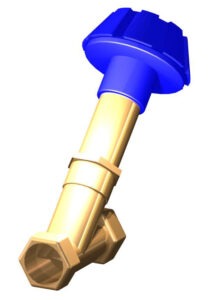
For example, reduced flow rates, smaller pipe bores, narrower apertures in regulating valves make the system more energy efficient but have lower tolerances to debris build-up.
Take the example of pressure independent control valves (PICVs). They provide fine control to optimise energy efficiency within systems but they are extremely sensitive to solids and debris.
So, it’s critical that filtration keeps pace with industry developments to meet the needs of modern equipment.
Furthermore, good water quality and high standards need to be achieved – and then maintained – for these components to continue to deliver against efficiency requirements.
Another aspect of modern building operation is the need to ensure that facilities teams can manage them to ensure reliability. If equipment requires manual intervention on sites, the reality is that it can more easily be overlooked.
Types of filtration
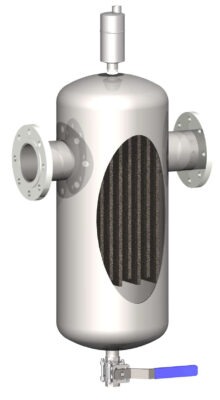
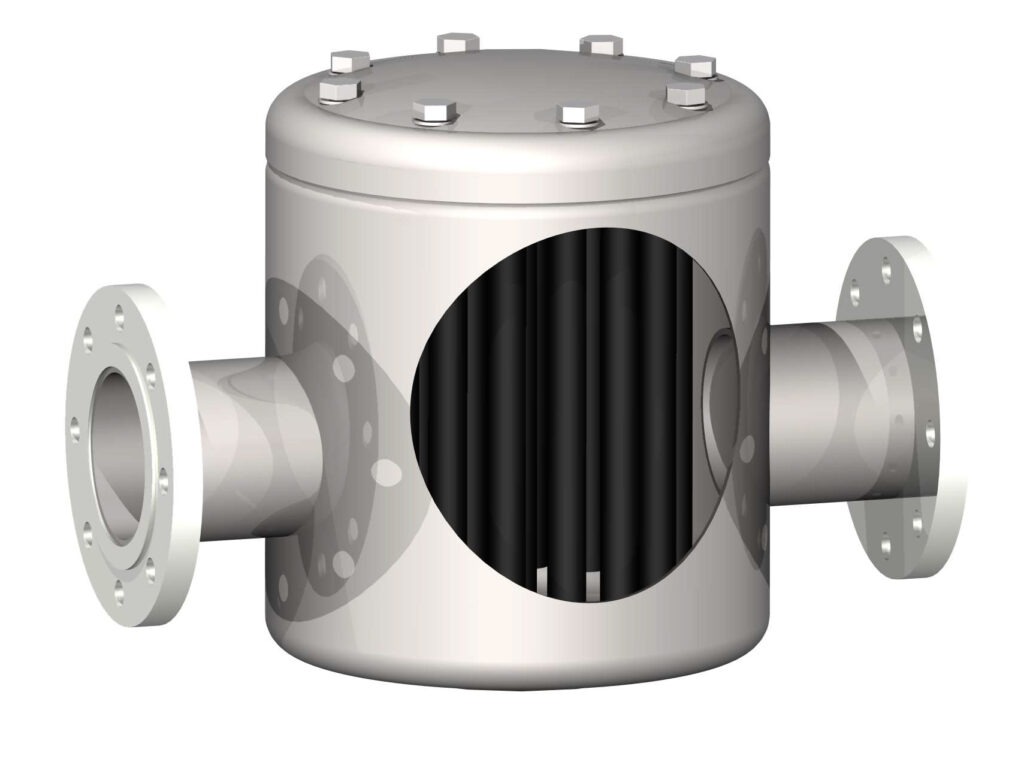
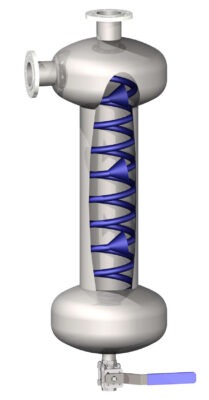
The strainers prevent large debris such as grit, stones or bolts damaging these expensive components. In addition to strainers, inline filters that process the bulk flow are also installed. These are typically ‘passive’ and rely on settlement of heavier, denser particulates from water as it passes through them. Positioned in-line they are designed to avoid restricting the bulk flow.
An alternative to the inline filter approach is side stream filtration, which has several benefits for today’s buildings.
Side stream filtration is based on system turnover, processing a proportion of the bulk flow of water. Typically, the system volume is turned over by 1-2 system volumes every 24 hours. This allows much finer levels of filtration, down to less than 10 microns.
‘Passive’ filtration
Typically the inline devices or the higher-flow side streams are considered ‘passive.’ The inline settlement filter is designed for denser particulate debris and relies on sedimentation. Passive filters are less able to remove the finer, less dense, or buoyant material in new or flushed systems.
Similarly, higher-flow cyclonic side stream filters also rely on sedimentation – using their higher flow rates to force denser debris out of suspension, onto their side walls, so it can sediment out.
Sedimented debris is typically manually purged from in-line devices, so consideration must be given to who takes responsibility for this task and how often. It is also important to consider the conditioned system water removed and ingress of mains cold water to the system when purging is carried out.
The higher-flow cyclones can also be manually purged using system water but typically have a collecting bag to catch heavy sediment which must then be manually emptied. Again, consideration should be given to who will be responsible for manually emptying and disposing of these.
These passive filter systems (inline and higher-flow cyclonic) can also include neodymium rare earth magnets to further assist with removing ‘magnetite,’ the densest material in these systems which also has magnetic properties.
However, it’s important to understand that a magnet is another component that must be cleaned manually. In addition, some require pumps to be switched off during this process to prevent any recirculation of dislodged magnetite during their cleaning – disrupting operation of HVAC systems. Where neodymium magnets are incorporated, these will also need checking, cleaning, replacing and the risk of handling magnets by the operators must be considered.
In-line Magnetic Cyclonic
‘Direct’ filtration
With the direct filtration approach, system water passes through a physical screen such as a fine strainer, cartridge, bag filter or media bed. This allows more precise filtration to a given size and all types of particles can be captured irrespective of their density or magnetic properties.
Surface filtration
This usually refers to the use of cartridge and bags. Debris collects quickly on their surface, so when they are working effectively, they are ‘blocking.’ As noted, these require manual intervention for inspection, replacement and disposal.
Consideration should be given to the micron rating of the cartridges to match the specific application. Less than 10 microns is considered optimal for removing fine sediments such as dirt, rust and magnetite.
However, cartridges and bags will block rapidly under poor water conditions. So, while it may seem that lower micron sizing would offer improved filtration, it will also increase the blockage rate, reduce system water flow and increase their replacement frequency.
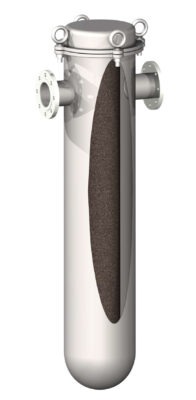
From a building operation point of view, it’s important to consider the time required to replace cartridges, as well as their disposal and contribution to site waste.
Depth filtration
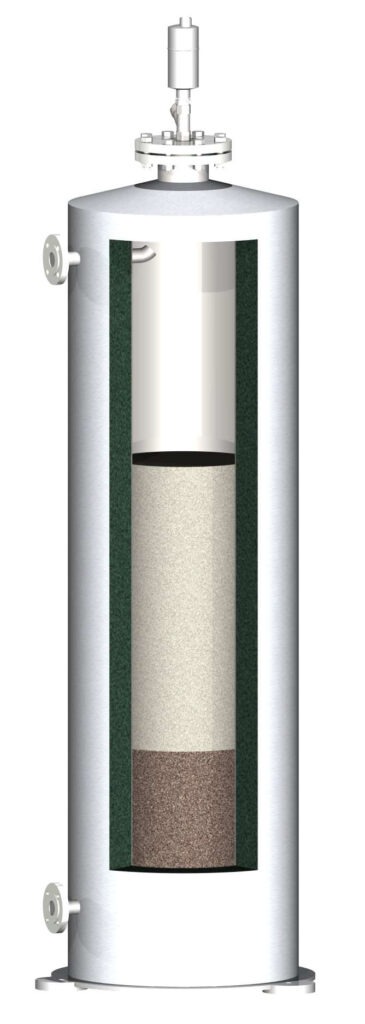
This is the capture of particles across increased filter depth, also known as sand filter and mixed media bed types. These have a reduced blockage rate, due to a high surface area for capturing particles, and can filter to <5 microns.
These types of filters allow more precise filtration to a given size and all particles can be captured irrespective of their density or magnetic qualities. So there is no need for additional magnets with these devices.
A backwash process cleans and reuses the filter media, minimising waste. The backwash can be carried out manually or can be fully automated.
A significant benefit of automation is that it reduces reliance on the site maintenance team to check and take hands-on action.
This trend to automating water treatment has huge benefits and is set to continue as buildings get ‘smarter’ and areas for neglecting maintenance are designed out. Automating filtration is the logical way to keep pace with modern day design.
The EnwaMatic approach
EnwaMatic side stream filtration and water treatment units use depth filtration and a reusable media bed able to filter to < 5 microns.
During the backwash process, mains cold water is used to flush collected debris to drain. System water exchange is minimal, and the mains cold water left in the vessel at the end of the backwash is then filtered and treated through the EnwaMatic before it enters the closed loop, minimising any impact on the overall system water quality and chemistry.
There is also an option to use the closed recovery BAF (Backwash Anti-Freeze) solution. With BAF, the backwash includes additional stages. The volume of fluid within the EnwaMatic is initially pumped into the main system and temporarily held by the systems expansion. The filter vessel is then isolated and undergoes a normal backwash with mains cold water. On completion, the vessel is emptied, ready to be refilled by the held volume. Once filled, the EnwaMatic returns to operation, filtering and treating the system water once more. The whole process is designed to maintain the ‘status quo’ and retain antifreeze and limit system water exchange.
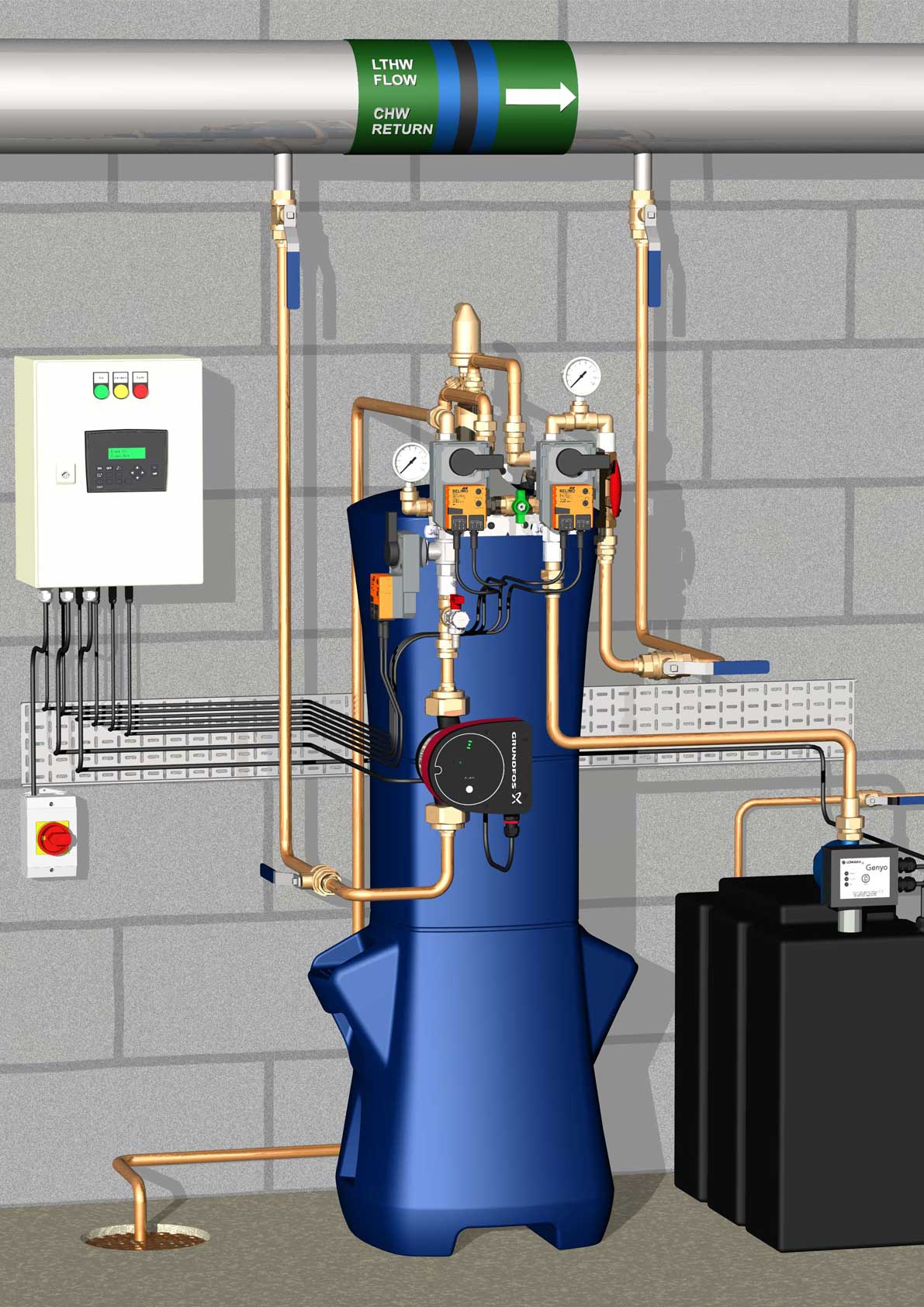
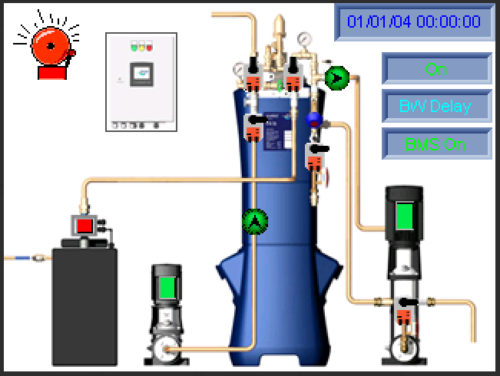
EnwaMatic, and if necessary BAF upgrades, can be applied where system designers, clients and guidance are targeting reductions in water exchange and system top up.
The EnwaMatic approach reduces the potential for neglect by providing suitable and adequate filtration with a self-regulating water chemistry.
Moreover, with increasing focus on achieving net zero and reducing the use of geopolitically sensitive world resources, this Scandinavian-designed technology provides a green approach and helps reduce wasted time and waste on site, helping to ease our clients busy workload and being complimentary to their sustainability agendas.
If you’d like to find out more about our approach to filtration & water treatment, we can offer CIBSE approved CPD presentations on the principles behind it and talk to you about how Enwa’s approach can benefit you or your clients’ buildings.