The UK prison estate is undergoing a period of significant change. The government is investing over £2 billion in a ten-year strategy to deliver 14,000 new prison places by 2031, including four brand new prisons in seven years.
Alongside the expansion programme there is an equally important focus on upgrading existing facilities. More than 60% of the existing prison stock is more than fifty years old, with over 25% built in the Victorian era. They are energy inefficient and challenging to operate.
Against this background, the Ministry of Justice (MoJ) has objectives around energy efficiency and carbon reduction, aligning the prison estate with the UK’s net zero ambitions. New prisons are often designed as all-electric, while existing sites are being retrofitted with low-carbon heating systems, renewable energy and improved building services.
In both cases, the performance of heating and cooling systems becomes critical, not just for energy efficiency, but for operational reliability. Water quality is a critical element of achieving both.
Prisons present a unique set of challenges for HVAC systems. These are large, high-occupancy buildings operating continuously, with significant demands placed on heating and hot water systems. Many older sites still rely on legacy infrastructure, where decades of operation have led to the accumulation of corrosion debris, sludge and biofilm within pipework.

This creates a familiar set of problems: reduced heat transfer, increased energy consumption, higher maintenance requirements and a greater risk of system failure. In an environment where systems must always operate reliably, these issues quickly become more than just an efficiency concern. At the same time, the operational context of a prison places strict limitations on how systems can be maintained.
Access is controlled; movement is restricted. Any facilities or engineering interventions must be carefully planned around security priorities. Even routine maintenance tasks that might be straightforward in a commercial building can become complex and resource-intensive in a secure environment.
The shift towards low-carbon heating systems adds a layer of complexity. Technologies such as air source heat pumps are central to the MoJ’s decarbonisation strategy, particularly in new-build prisons designed to operate without fossil fuels.
However, these systems are typically more sensitive to water quality than traditional boilers. They rely on efficient heat exchange and stable system conditions to perform effectively. Even relatively small amounts of debris or fouling can have a disproportionate impact on efficiency and reliability.
This makes water treatment not just a supporting consideration, but a fundamental requirement for successful decarbonisation. Without good water quality, the expected performance gains from low-carbon systems can quickly be eroded.
Traditional approaches to water treatment often rely on periodic intervention, including manual cleaning of filters, replacement of consumables such as filter bags or cartridges, and regular inspection of components such as magnetic separators. These approaches can be less suited to the operational realities of a prison because every manual task introduces a requirement for access, supervision and coordination. Over time, increases the operational burden on facilities teams and create additional pressure in an already constrained environment.
This is where a more automated approach becomes particularly valuable. Side stream filtration offers a different way of maintaining water quality. By continuously removing suspended solids from the system, it prevents the build-up of sludge and debris that would otherwise accumulate over time.
In the case of Enwa’s EnwaMatic Side Stream Filtration, this process is fully automated. The system operates continuously, with self-cleaning functionality that eliminates the need for routine manual intervention. There are no disposable filter bags or cartridges to replace and no magnets that require regular cleaning.
For prison environments, this brings several important benefits. First, it reduces the need for frequent human interaction with the system. Maintenance teams can focus on higher-value tasks, while routine water treatment processes are managed automatically in the background.
Second, it supports consistent system performance. Continuous filtration helps maintain stable water conditions, protecting heat exchangers, pumps and other critical components from fouling and wear.
Third, it contributes directly to energy efficiency. By keeping systems clean, it enables heating and cooling equipment to operate at optimal efficiency – an essential factor in meeting the MoJ’s energy and carbon reduction targets.
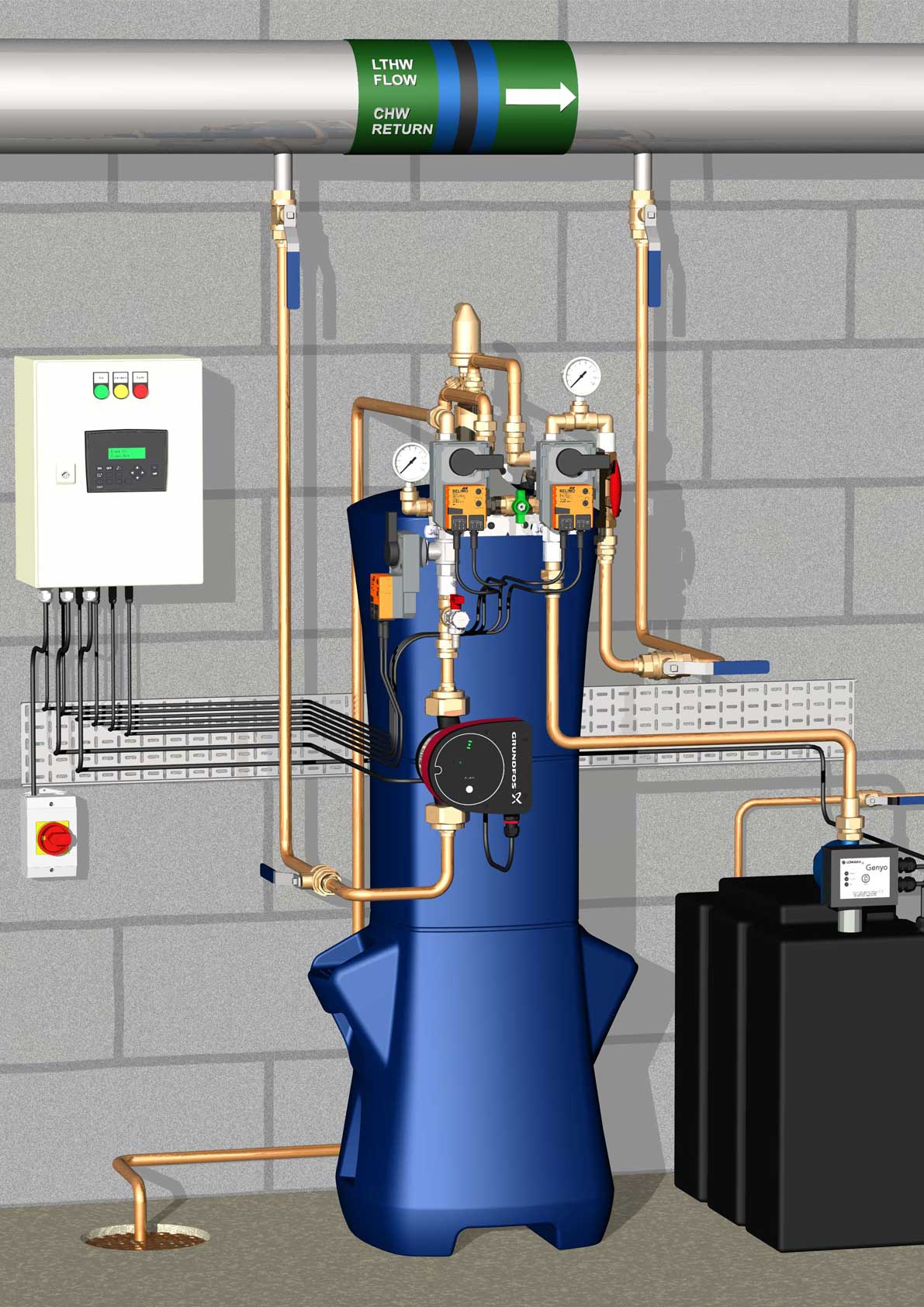
The advantages of automated side stream filtration apply equally to new and existing prison facilities. In new-build projects, where low-carbon heating systems are being installed from the outset, maintaining high water quality is essential to achieving the intended design performance. Integrating automated filtration into the system design helps ensure that performance is sustained over time.
In older prisons undergoing refurbishment, the benefits can be even more immediate. Existing systems often contain significant levels of accumulated debris, which can be mobilised during upgrades or when new equipment is introduced. Side stream filtration provides a way to gradually clean the system without the need for disruptive flushing or chemical treatment processes.
As the prison estate continues to evolve, expanding capacity, improving conditions and reducing its environmental impact, the role of building services will become more important. Reliable, efficient heating and hot water systems are fundamental to the safe and effective operation of these facilities.
Water treatment may not always be the most visible part of that equation, but it is one of the most critical. In a sector where access is restricted and operational priorities are tightly controlled, solutions that reduce the need for intervention while maintaining high performance offer clear advantages.
By combining continuous filtration with automated operation, Enwa’s EnwaMatic Side Stream systems provide a practical, robust approach to maintaining water quality, supporting both the efficiency and reliability of HVAC systems across the prison estate.